How open are you? The case for inclusion over conformity in asset management hiring
Timothy R. Clarke’s The 4 Stages of Psychological Safety begins with a simple observation: before we interact, we are separate but not excluded. As we begin to engage, we decide how to accept one another. That acceptance, or its absence, happens primarily through granting or withholding psychological safety: the state in which people feel free to learn, contribute and challenge without fear of embarrassment or punishment.
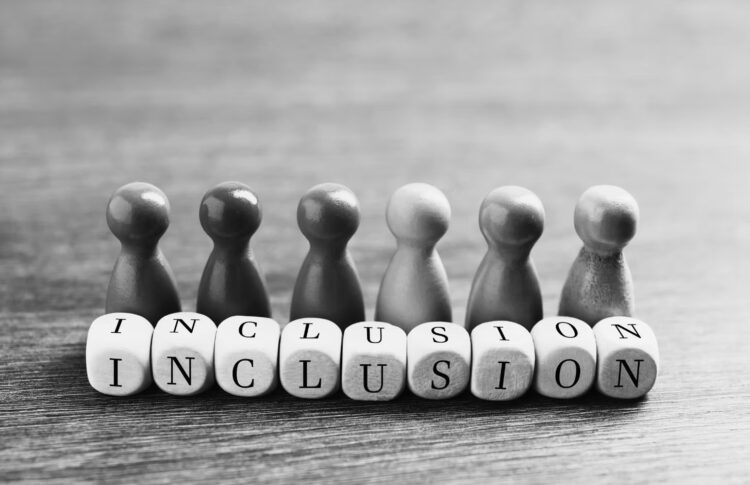
Firms across the asset management industry have made real progress on diversity in recent years, including on gender representation. The harder question, and the one that receives less attention, is whether they are building inclusion too. The two are not the same.
Since the pandemic, candidates have placed greater weight on culture. They want to work in open, non-judgemental teams where they feel secure enough to express ideas and contribute. But this is not simply a question of employee welfare. For firms that depend on innovation, it is a commercial imperative.
Companies thrive through innovation, which is typically a collaborative process. It requires creative abrasion and constructive dissent: high intellectual friction and low social friction. That dynamic can only emerge through open dialogue, where employees feel safe to challenge prevailing views. A firm that has diversity on paper but not inclusion in practice will not generate the creative friction it needs.
For hiring companies, this means building recruitment processes that actively support psychological safety, reduce unconscious bias and encourage cognitive diversity. Inclusive recruitment is not simply about attracting diverse candidates; it is about building an environment where different perspectives are heard, respected and used to improve decision-making.
Are you building an inclusive or exclusive culture?
When managers promote open communication, employees feel respected and included, and a more collaborative environment follows. This can be achieved through open discussion forums, feedback from all levels and informal gatherings that encourage candid exchange.
An ‘exclusive’ culture, by contrast, can produce the opposite. Those who feel excluded become alienated; the organisation divides or a tribal culture emerges, with groups competing for the attention of senior management.
Managers can reinforce inclusion by encouraging people to admit mistakes, including their own. When a manager openly discusses where they went wrong, it signals that the organisation values honest reflection. Employees who feel secure in that way are more likely to engage fully and take initiative.
That process should not stop at individual behaviour. Discussion groups and reviews should run across the organisation and at different levels of experience. Anonymous 360-degree reviews are a useful mechanism: they allow dissenting views to reach those who shape company policy, and staff engagement rises when people feel their perspective is taken seriously.
What does this mean for recruitment best practice?
- Do not hire ‘identikit’ candidates. Collegiate cultures are particularly at risk of hiring people who are too ‘nice’, because those who do not challenge the culture will not rock the boat. Whilst it is important to hire people who buy into your vision and values, focusing on conformity risks losing the creative abrasion and constructive dissent needed to drive improvement. If everyone comes from the same social background, the same nationality or the same educational background, constructive debate is less likely to occur.
- Consider hiring people with differing personalities and temperaments: for example, people less socially fluent and more analytical, or more socially fluent and less analytical, depending on the existing balance of the team. Deliberately hiring employees with more dominance and independence can be helpful: they may need more careful management, but they are likely to bring fresh perspectives and innovation. Or consider hiring people who prefer change and variety over following due process. Godliman’s personality testing identifies these attributes and behavioural preferences clearly, so that hiring companies can make a conscious choice about temperament when building for inclusion.
- Consider hiring more people with a neurodiverse background: for example, people with dyslexia may be less fluent in writing but are highly creative, excellent at big-picture thinking, lateral thinking and problem-solving, with an intuitive understanding of how things work. Similarly, people with ADHD bring creativity, high levels of energy and a capacity for multi-tasking. Their ability to hyperfocus (link to be confirmed — replace with a specific ADDitude or CHADD article on hyperfocus) can lead to exceptional productivity, deep engagement and the ability to accomplish complex tasks efficiently.
- Make your interview panels inclusive. It is important that candidates meet people from differing backgrounds; otherwise the same conformist attitudes prevail.
- Guard against the unconscious biases that routinely occur in interviews. There is evidence that candidates deemed the most ‘likeable’ by a selection panel most often get the job. A focus on ‘nice-ness’ can lead to the exclusion of talented candidates, particularly for Sales roles where interviews tend to favour ‘fluff’ over ‘stuff’. Conversely, an over-reliance on first impressions can reinforce exclusion bias.
- Avoid artificially ‘adversarial’ or highly pressurised interview tactics. Unless keeping calm under duress is a specific requirement of the role, high-pressure formats may deter candidates who are less dominant or less extrovert in communication style. They also signal that the employer does not offer a safe space, which will send the wrong message to precisely the candidates you most want to attract.
- Onboard new hires with care. Make sure they feel heard and are given a voice from the start: you want to maximise the benefit of inclusion by encouraging the fresh perspectives that a new employee brings. Consider asking them to write a short paper after three months on what they think is working well and what might be better, or which practices from their previous roles might benefit your organisation.
At Godliman, we have seen at first hand how unconscious bias shapes candidate selection, often in ways the hiring team does not recognise until after the fact.
Our proprietary Search process addresses this directly, subjecting all candidates to a systematic and structured three-step Best-Fit Search™ and Assessment process.
Best-Fit Search™ evaluates candidate ‘Fit’ in the broadest possible sense, looking for the best complementary skills to the existing team, which sometimes means deliberately hiring for creative friction. As a result, the longevity and impact in role of our hires are significantly above the industry norm.
If you would like advice on improving your firm’s hiring processes to strengthen both diversity and inclusion, contact us at hello@godliman.com.
You can download a PDF copy of this article here