At Godliman, 90% of our team are women, so we are keenly aware of how few women reach senior levels in Asset Management, and how much we want to attract candidates from the widest possible base.
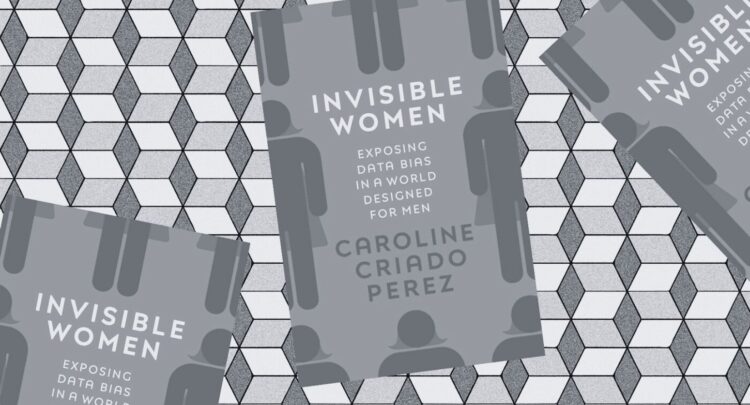
Like many people, I thought I had a reasonable handle on gender bias. But reading ‘Invisible Women’ by Caroline Criado-Perez made me realise that the unconscious language choices I make, spoken and written, may have kept some roles from appealing to women at all.
Criado-Perez’s argument is that words such as ‘ambitious’, ‘persistent’ and ‘competitive’ in a job description carry masculine associations and, without anyone deciding it consciously, discourage women from putting themselves forward. The same happens when we, as headhunters, use those words to ask our market sources for recommendations: we may stop people suggesting women in the first place.
Words like ‘enthusiasm’ and ‘innovation’, used for the same role, are said to raise women’s interest and make people more likely to recommend a woman. Criado-Perez cites a European company whose applications from women rose from 5% to 40% simply by changing the language for an otherwise identical role.
How many of us think about how we describe a role so that it appeals to women as well as men? How many ask our clients to change the way they describe a job to the same end? Most clients are keen to attract a diverse shortlist, yet often undermine that aim through the specific words they choose in a job description or advertisement. As Criado-Perez puts it, ‘you do not have to realise you are being discriminated against to in fact be discriminated against’.
The fix is relatively simple. As headhunters, we can choose language when market sourcing that speaks to both men and women; it is an easy win, and it makes for a more diverse shortlist. A quick search turns up plenty of guidance on which words land differently with men and women, and the same applies to making a job description more even-handed on gender. Raising it with clients is usually straightforward, since diversity is well-trodden ground and most respond well. Later, as the interview process develops, it is worth making sure those running the interviews describe the role consistently to male and female candidates.
A word of caution: in adjusting our language we still want to appeal to the broadest possible field, which of course includes men. A 2011 paper by Gaucher, Friesen and Kay for the American Psychological Association found that more feminine wording appealed to far more women while only slightly reducing the number of men applying, whereas more masculine wording cut the number of women sharply. In short, gender-themed words affect women more than men, which is also one of the forces behind the authority gap.
Now that I understand the effect our language has, I try to choose my words more carefully. It is one of the simplest changes any of us can make.
If you would like help reviewing how your roles are described, so they attract the widest possible field of talent, please contact us at hello@godliman.com.